How Automation and AI Will Collaborate with Human IT Workers
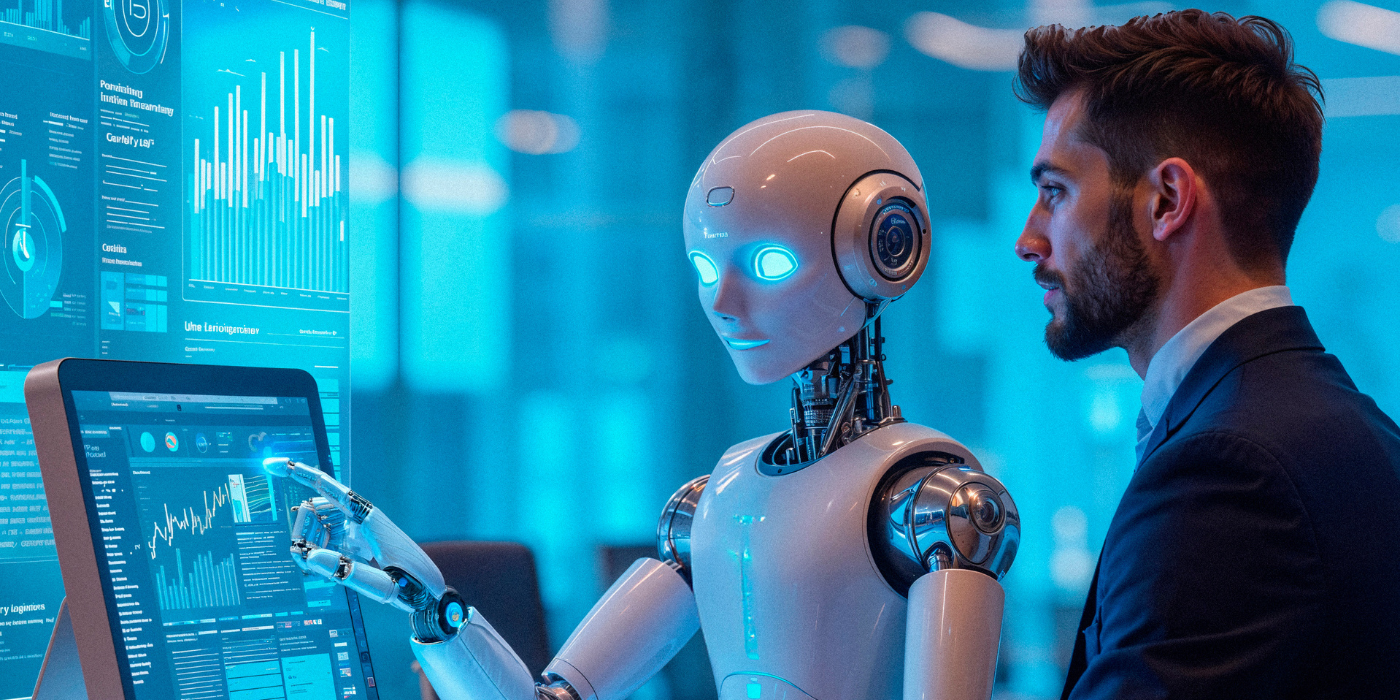
Introduction: The Future Is Not Man vs Machine, It’s Man with Machine
The discussion about Artificial Intelligence (AI) and automation has been scary for a long time. The news headlines are usually creating an implication that machines will take over human labor particularly in technological jobs. However, the true future of work is another story. Automation and AI are not going to substitute human beings but emerge as their potent collaborators, which can assist IT professionals to work smarter, faster and more creatively.
This co-operation is already evident in the IT industry. In software development to cybersecurity, in data analysis to cloud management, AI is using robotics to augment human abilities and not to kill them. To both professionals and employers, it is important to comprehend this partnership in order to remain competitive in the fast-changing digital economy.
This shift is an opportunity as opposed to a closed door to job seekers who are affiliated to a Toronto Recruitment and Job Agency or professionals seeking opportunities by Job Agencies in Canada. The demand is not vanishing – it is changing.
Understanding Automation and AI in the IT Workplace
Automation refers to using technology to perform repetitive, rule-based tasks with minimal human intervention. AI goes a step further by enabling machines to learn from data, recognize patterns, and make intelligent decisions.
In IT environments, automation handles activities such as system monitoring, routine testing, data processing, and infrastructure management. AI supports complex functions like predictive analytics, intelligent cybersecurity monitoring, and natural language processing.
However, these technologies still depend heavily on human input. They require people to design systems, interpret results, apply business context, and make strategic decisions. Machines can process information, but humans provide judgment, ethics, creativity, and emotional intelligence.
This is why the future is collaborative, not competitive.
Why AI Cannot Replace Human IT Professionals
AI has obvious shortcomings in spite of its strength. It is deprived of human intuition, empathy and contextual understanding. Technical proficiency is not enough to make IT projects successful. They need to communicate with stakeholders, frame problems, ethical thinking and flexibility, which humans are great in.
As an illustration, an AI system can identify abnormal network traffic, but a cybersecurity expert has to determine whether it represents a real threat, the effects on the business, and report risks to the leaders. Likewise, the analysis of user data may be conducted by AI, yet human developers are required to develop systems that will not violate privacy-related laws and user trust.
Technology is not enough to handle the relationships with clients, negotiate the requirements, and know the organizational culture in complex settings such as enterprise IT outsourcing projects. Human professionals still are necessary.
How Automation Is Redefining IT Roles, Not Eliminating Them
Automation is not eliminating jobs but reinventing them. Many conventional IT positions are changing to more strategic ones.
Activities that used to take hours like manual testing, log tracking; server provisioning among others have now become automated. This enables the professionals to devote more attention to the more valuable work such as system architecture, innovation, security strategy and performance optimization.
This is most noticeable to the professionals seeking SAP Jobs in Canada. SAP environments are progressively applying automation in system monitoring, patch as well as reporting. SAP consultants are no longer as busy with repetitive configuration but with projects of digital transformation, business processes optimization, and advanced analytics.
The job is not lost, it is given a new meaning..
Human-AI Collaboration in Software Development
Software development is one of the clearest examples of AI-human collaboration.
AI-powered tools can now:
- Suggest code
- Detect bugs early
- Optimize performance
- Automate testing
Developers use these tools as intelligent assistants. Instead of writing every line manually, they review AI-generated code, improve architecture, and focus on innovation.
Human developers still control design decisions, user experience, security standards, and business logic. AI accelerates development, but humans remain responsible for quality and direction.
This partnership increases productivity while raising the importance of strong technical judgment and system thinking.
AI and Automation in Cybersecurity: A Team Effort
Cybersecurity threats are growing more sophisticated. AI plays a critical role by scanning millions of data points in real time to detect anomalies and potential attacks.
However, AI alone cannot manage cybersecurity. It can identify patterns, but human experts must:
- Investigate complex threats
- Understand attacker behavior
- Develop response strategies
- Educate organizations
Security is not just technical — it is strategic and behavioral. Humans bring the insight that machines cannot.
This is why cybersecurity professionals remain in high demand across Canada, supported by Job Agencies in Canada that connect skilled experts with organizations facing evolving digital risks.
The Role of AI in IT Outsourcing Models
Automation is also transforming the global IT industry based on the modern strategies of IT Outsourcing.
Companies are now out sourcing not only to save money, but to save time, innovate and to get special skills. The AI-driven automation will assist an outsourcing team in producing quicker outcomes by automating infrastructure management and application support as well as service desk operations.
However, people still make the difference in the successful IT outsourcing. Human leadership is needed in client communication, planning integration of systems, and digital strategy in the long term.
The outsourcing companies are seeking more and more people who will collaborate with AI technology rather than be in competition with it.
New Skills IT Professionals Must Develop
As AI handles routine tasks, human IT workers must develop skills that machines cannot replicate easily.
These include:
- Critical thinking and problem-solving
- System design and architecture
- Cybersecurity strategy
- Data interpretation and business insight
- Communication and leadership
- Ethical and regulatory understanding
Technical skills remain important, but strategic and analytical abilities are becoming equally valuable.
Professionals who combine technical expertise with business understanding will lead the next generation of IT roles.
How AI Is Changing IT Hiring Trends in Canada
The trend in hiring practices is changing across the country. Employers do not seek after smoking skills in the code. They desire expertise that is able to deal with smart systems and lead the way of digital transformation.
One of the most popular Recruitment and Job Agencies in Toronto now assesses the candidates based on their adaptability, mindset to learn, and AI preparedness. The most suitable applicants will be those who view automation as an instrument rather than a menace.
In the case of job seekers who go through Job Agencies in Canada, it implies that they must be constantly upskilled. AI, cloud platform, cybersecurity, and advanced analytics certifications can make one much more employable.
The Future of SAP Jobs in an AI-Driven Workplace
The SAP ecosystem offers a strong example of human-AI collaboration. AI is being embedded into SAP systems for predictive analytics, intelligent automation, and smart process optimization.
Yet, companies still need skilled SAP professionals to:
- Customize systems
- Integrate business processes
- Interpret AI-driven insights
- Lead digital transformation initiatives
As a result, SAP Jobs in Canada are evolving, not disappearing. SAP consultants with knowledge of AI-enabled platforms such as SAP BTP and analytics tools are increasingly valuable.
This demonstrates a key reality: technology increases the importance of skilled professionals rather than reducing it.
AI as a Productivity Partner, Not a Replacement
One of the biggest advantages of AI is productivity enhancement. AI handles data-heavy, repetitive tasks, allowing humans to focus on creative and strategic work.
This leads to:
- Faster project delivery
- Higher-quality systems
- Reduced human error
- Better decision-making
In IT teams, this collaboration creates a more balanced and efficient work environment where humans and machines perform complementary roles.
Ethical and Human Oversight Remains Essential
AI systems must operate responsibly. Issues such as data privacy, bias, and security cannot be managed by algorithms alone.
Human professionals must ensure:
- AI decisions are transparent
- Systems follow legal standards
- Technology aligns with business values
Ethics, governance, and accountability will remain human responsibilities in every advanced IT environment.
How IT Professionals Can Prepare for the AI-Driven Future
To succeed in this collaborative future, IT professionals should:
- Learn AI fundamentals and applications
- Gain experience with automation tools
- Develop business and communication skills
- Stay updated with emerging technologies
Those who adapt early will benefit the most.
Recruiters and employers already prioritize candidates who demonstrate both technical expertise and strategic thinking.
Why Human Expertise Will Always Matter in Technology
The pace of technology is fast, yet human intellect continues to be the main focus of innovation. Machines manipulate information, people develop sight.
The impact of AI is that it does not make organizations successful, but people use AI to solve real-life challenges.
Human professionals are central to digital progress in system architecture working up to cybersecurity leadership, enterprise transformation working up to IT outsourcing strategy.
Conclusion: The Future Is Collaborative, Not Competitive
Automation and AI are not replacing human IT workers — they are reshaping their roles. The future belongs to professionals who can collaborate with intelligent systems to deliver better outcomes.
For job seekers working with a Toronto Recruitment and Job Agency, for professionals exploring SAP Jobs in canada, and for organizations partnering with Job Agencies in Canada, this evolution brings opportunity, not loss.
Even in modern IT Outsourcing models, success depends on the combination of advanced technology and skilled human expertise.
The IT workforce of tomorrow will not be defined by machines alone — it will be defined by how effectively humans and machines work together.
The real transformation is not about replacing people.
It is about empowering them.